
Valora
Valora Consultora: from its origins to multidisciplinary leadership
Valora was founded in 1990 with a clear mission: to increase the reliability and transparency of valuations in the Uruguayan market. At a time when many valuations consisted solely of a letterhead, a brief description, and a number, its team was committed to professionalization. From the outset, they strove to demonstrate that behind each figure there was rigorous analysis: review of plans, detailed calculations, and methodologies. This not only provided technical support but also responded to a real need in the financial sector, which was then in its infancy in terms of mortgage lending.
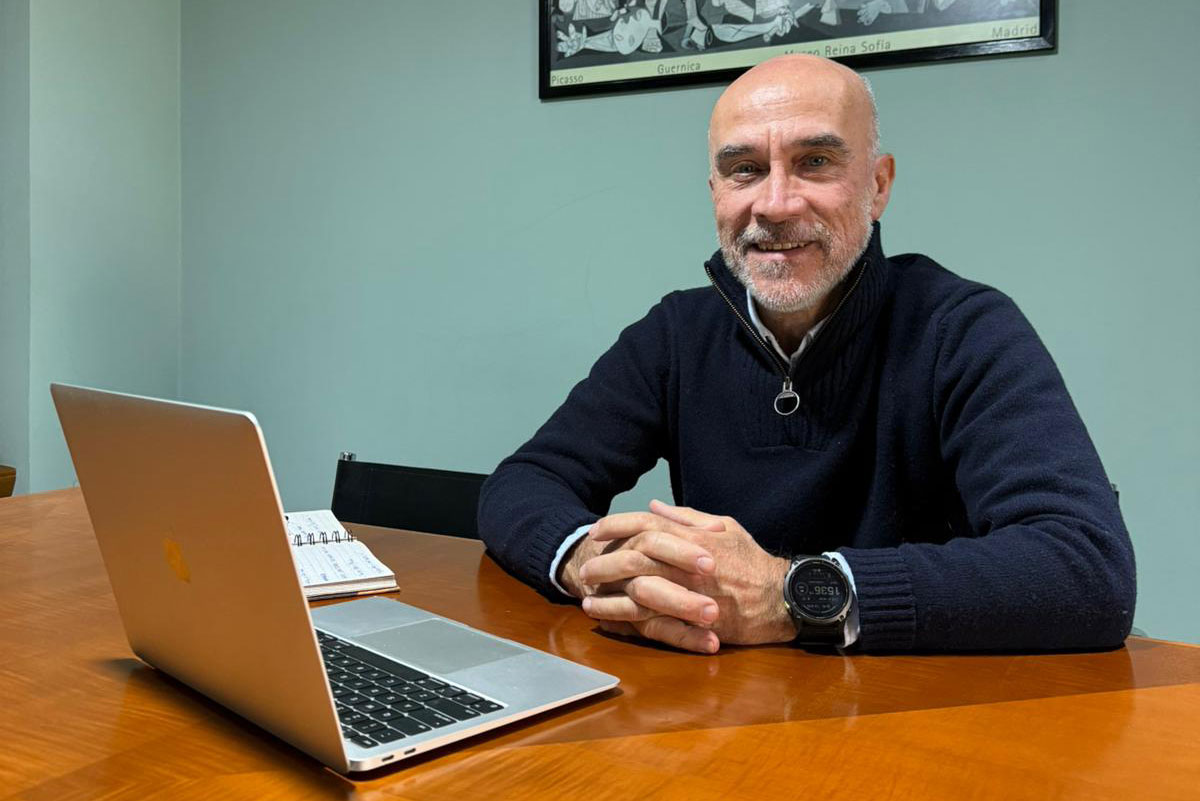
Today we meet Hugo Cersósimo, CEO and founder of Valora.
What was the objective when Valora was created?
Hugo Cersósimo is the CEO and founder of Valora Consultoría & Valuaciones, a pioneer in Uruguay since 1990 in the technical valuation of real estate assets and specialized consulting. Under his leadership, Valora transformed a traditionally estimated activity into a rigorous protocol that integrates architecture, engineering, agronomy, economic analysis, and civil, agricultural, and industrial construction auditing.
How has Valora evolved over the years it has been on the market?
From the start, their goal was to raise market standards by bringing transparency and methodological foundations, something the firm now offers with a team of university-trained professionals skilled in multiple disciplines.
Throughout this interview, Hugo shares how they transformed a traditional real estate appraisal into a solid proposal backed by a team of technicians specialized in appraisals, known for their honesty and transparency, and now capable of appraising everything from real estate to industrial and agricultural assets and environmental studies.
What is Valora’s proposal?
Over time, Valora expanded its value proposition. As he explains, “Valora’s proposition evolved to provide interdisciplinary services.” Today, it has a team that combines economists, agronomists, industrial consultants, engineers, and architects. “Today we can determine the value of anything. From an appliance to an airplane,” he says with satisfaction.
What makes Valora unique?
When talking about what makes Valora unique, he acknowledges that it is not a global singularity: “Valora is not unique; it exists in other parts of the world.” But he highlights something essential: “What makes Valora unique is the profile we give it, its integrity and honesty; we put a lot of heart into all of that.” This combination of professionalism and ethical and emotional commitment defines its corporate DNA.
On the other hand, Valora’s clients gain a clear advantage: a single interdisciplinary team with complementary skills that combines strategic vision, technical knowledge, and local context awareness. This eliminates the need to hire separate professionals, while enriching the analysis of each project with multiple points of view. This versatility is complemented by firm values that guide every decision: “honesty, integrity, commitment, transparency, and not overstepping boundaries.” Valora’s clients notice the difference in the interdisciplinary approach and the richness of collaborative work.
What were the main challenges?
Among the original challenges, the cultural shift in a traditional market reluctant to digitization and the introduction of quantitative data stands out. “Thirty-five years ago… decisions were based more on experience than analysis,” he recalls. At that time, there were no smartphones or agile calculation tools, and decisions were based on experience rather than technical analysis. Innovation, presenting rigid reports with technical backing, meant facing a market unaccustomed to systematic processes. “The big challenge was convincing customers that we had come up with an innovative tool that would work, but it was also our first success: demonstrating how Valora obtained that key numerical value gave us credibility, and we achieved this by showing what lies behind each valuation.” Thus, consolidating its reputation.
The future of valuations, consulting, and transformation in Uruguay
Hugo points out that “it is a job that will last for years because the need for a consultant with an objective and realistic vision is always very necessary.” In addition, he sees a scenario where the number of foreign investors settling in Uruguay is growing and where locals will need to adapt to more analytical and data-driven processes. Professionalization is no longer optional: it is mandatory.
He also highlights that: “In the areas where we have noticed the greatest need for transformation is that it is not common for local investors to conduct in-depth market analysis before embarking on a project; sometimes they rely more on intuition than on rigorous data. In other markets, such as the international market, this culture is already more established. Our challenge is to help drive this change and encourage more informed and structured decision-making.”
In short, for Valora’s CEO, “moving from intuition to evidence, with ethical rigor,” this paradigm shift from subjectivity to methodicalness, with professionalism, multidisciplinarity, and honesty is, in his words, “the promise of objectivity backed by methodology, experience, and honesty.”
